Why this matters
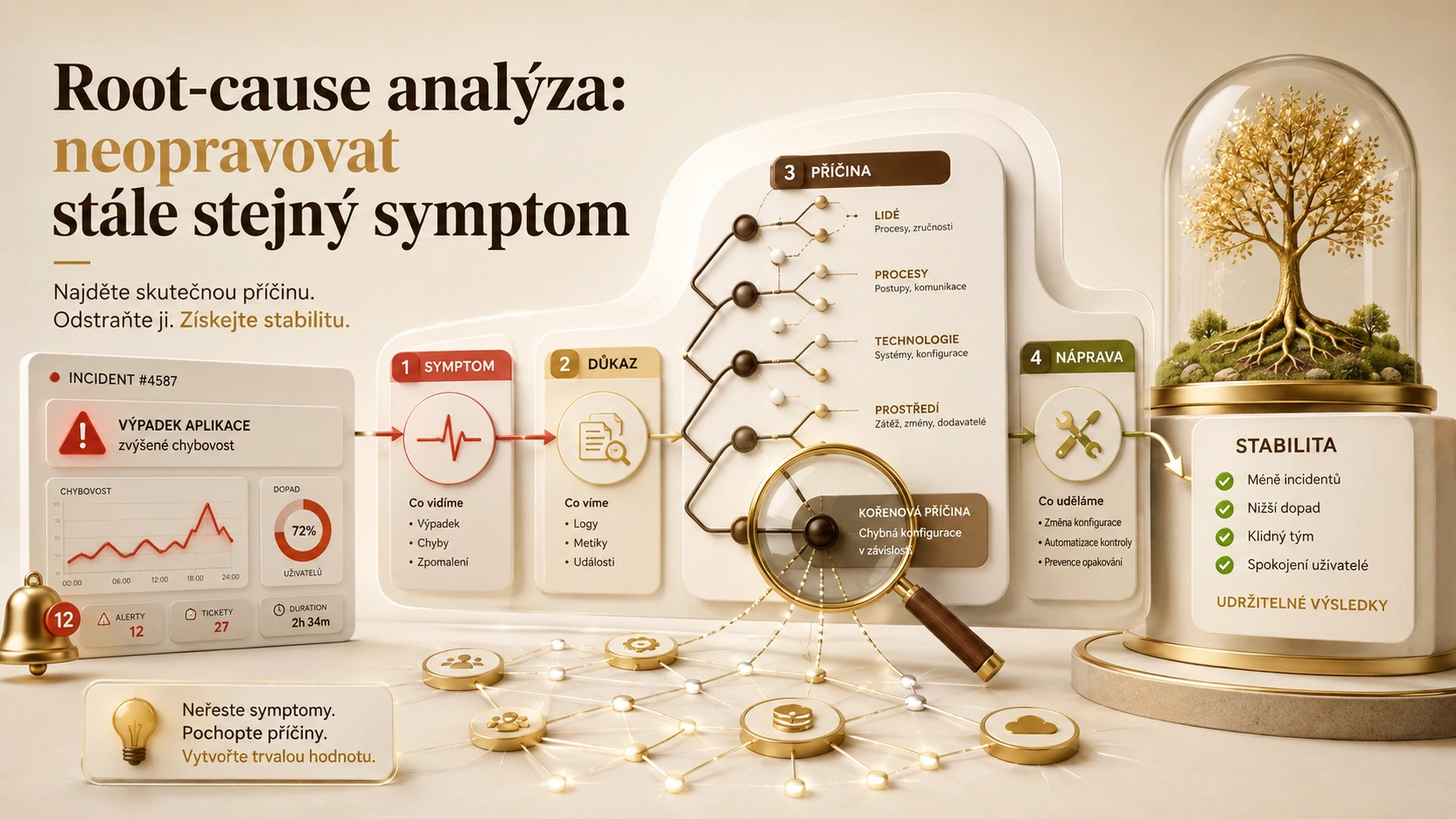
Incidents often produce pressure for an immediate explanation. The first visible cause, however, may be only the last link in a chain of decisions, conditions and missing controls.
Effective root-cause analysis avoids blame and looks for changes that strengthen the system rather than merely naming the person or component closest to the failure.
How to do it well
Stabilise first
Restore service, protect data and preserve logs before beginning a deeper analysis.
Build the timeline
Record what changed, what happened and when, using verifiable sources.
Describe the symptom precisely
Separate user impact from technical messages and assumptions.
Explore causal branches
Use five whys, fault trees or data-flow analysis while testing each link against evidence.
Identify missing barriers
Ask which validation, review, monitoring or recovery control should have prevented or limited the event.
Verify corrective actions
Assign owners, deadlines and success measures, then confirm that recurrence risk actually falls.
What to avoid
- Stopping at “human error”.
- Choosing a cause before the timeline is complete.
- Confusing correlation with causation.
- Creating a long action list without prioritisation.
- Closing the analysis without checking the effectiveness of changes.
Practical example
An export failed because a provider rejected a payload. The deeper chain may include an undocumented field limit, missing validation and no alert on rejected records.
The strongest action is not “be more careful”, but adding validation, contract coverage and monitoring that detects the condition earlier.
Lesson for practice
Root-cause analysis is valuable when it changes the system. Evidence, multiple contributing factors and verified corrective actions prevent the same pattern from returning under a new symptom.
A good practice does not have to be complicated. It should be intentional, repeatable and explainable: the team should understand why the control exists, what evidence it provides and how feedback will improve the next iteration.