Why this matters
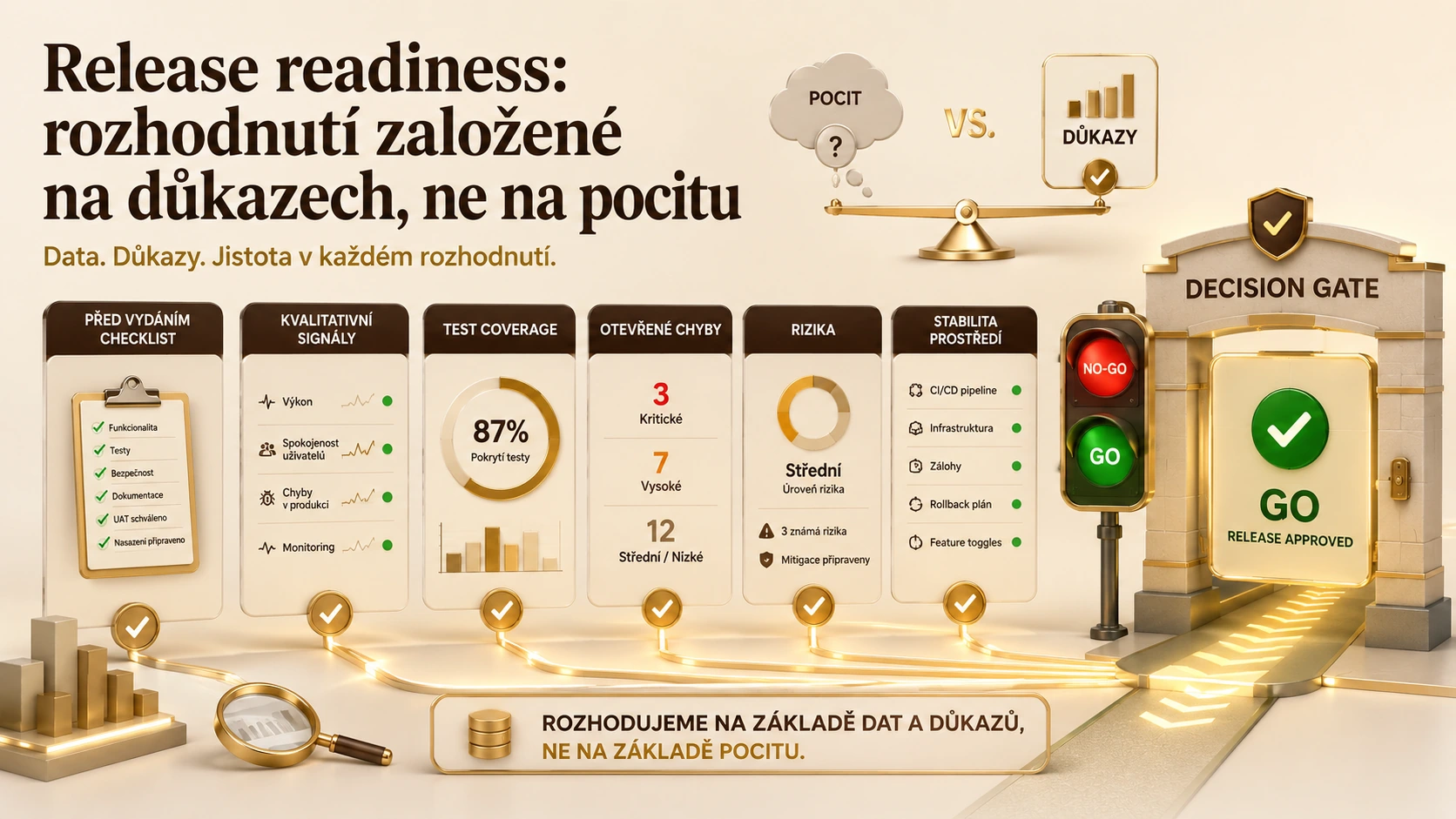
A release decision combines product quality, technical readiness, data migration, support, monitoring and rollback. When these signals are scattered, the meeting becomes a debate based on confidence rather than evidence.
A readiness checklist should support judgement, not replace it. The most useful checklist is short, risk-based and linked to owners and evidence.
How to do it well
Summarise the change
List user-visible changes, dependencies, migrations and affected workflows.
Review risk and evidence
Connect high-risk areas to test results, known limitations and accepted exceptions.
Confirm operational readiness
Verify dashboards, alerts, support information and on-call ownership.
Define rollout and rollback
Specify feature flags, stages, stop conditions and recovery steps.
Check data and compatibility
Validate migrations, contracts, backups and backward compatibility.
Record the decision
Document go/no-go reasoning, accepted risks and post-release checks.
What to avoid
- Using “all tests passed” as the only release criterion.
- Creating a checklist so long that people complete it mechanically.
- Discovering rollback limitations during an incident.
- Leaving accepted defects without impact and owner.
- Failing to verify the release after deployment.
Practical example
A release with a new campaign scheduler may pass functional tests but still be unready if queue monitoring and rollback of scheduled jobs are missing.
The decision can remain “go” if the risk is understood, rollout is gradual and explicit stop criteria are in place.
Lesson for practice
Release readiness is transparent risk management. A shared, evidence-based view allows teams to move quickly without confusing optimism with preparedness.
A good practice does not have to be complicated. It should be intentional, repeatable and explainable: the team should understand why the control exists, what evidence it provides and how feedback will improve the next iteration.