Why this matters
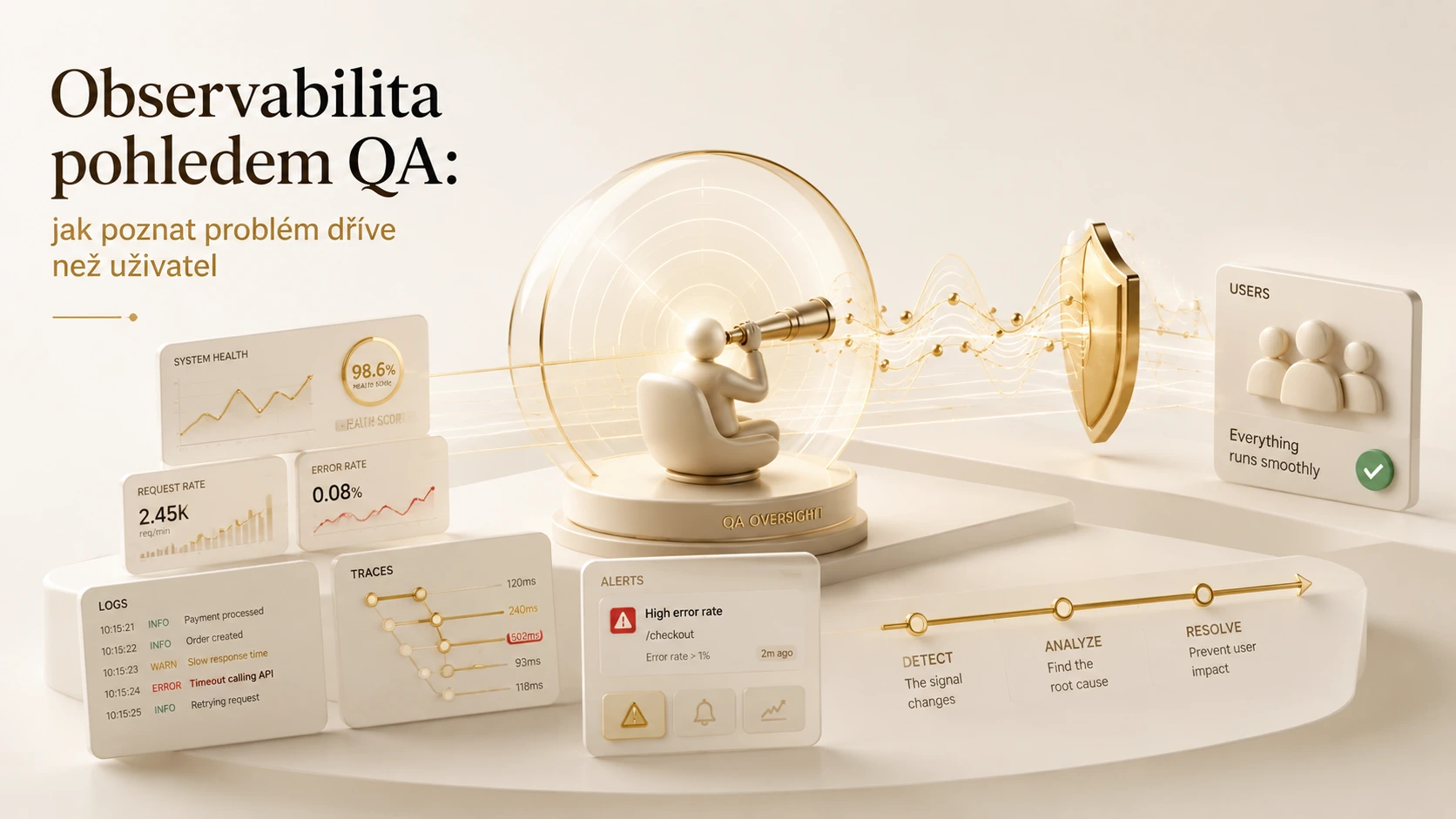
A feature that fails silently is difficult to support and difficult to test. Observability makes internal state visible enough to answer what happened, where and to whom.
QA can improve observability by testing diagnostic signals alongside functional behaviour and by asking whether evidence is useful during an incident.
How to do it well
Identify critical questions
Define what the team must know when a flow slows down, fails or produces an unexpected result.
Add correlation
Use request, job and business identifiers that connect logs, traces and user-visible events.
Choose actionable metrics
Measure latency, error rate, throughput, queue depth and business completion where relevant.
Structure logs
Record event name, outcome, context and cause in a searchable format rather than unstructured prose.
Test failure paths
Trigger timeouts, invalid input and dependency failures and confirm that evidence remains complete.
Review alerts
Ensure alerts represent user impact, have owners and contain enough context for the first investigation.
What to avoid
- Logging everything without structure or retention strategy.
- Including passwords, tokens or personal data in diagnostics.
- Alerting on every technical fluctuation regardless of user impact.
- Using different identifiers across services so traces cannot be joined.
- Testing happy paths while leaving failure evidence unverified.
Practical example
A delayed campaign job should expose queue time, processing time, provider response and a correlation ID visible in support tooling.
Instead of “export failed”, a useful event distinguishes validation failure, authentication, provider throttling and internal transformation errors.
Lesson for practice
Observability is part of product quality because it shortens detection and diagnosis. QA adds value by verifying not only that a failure occurs correctly, but that the system explains it safely and usefully.
A good practice does not have to be complicated. It should be intentional, repeatable and explainable: the team should understand why the control exists, what evidence it provides and how feedback will improve the next iteration.