Why this matters
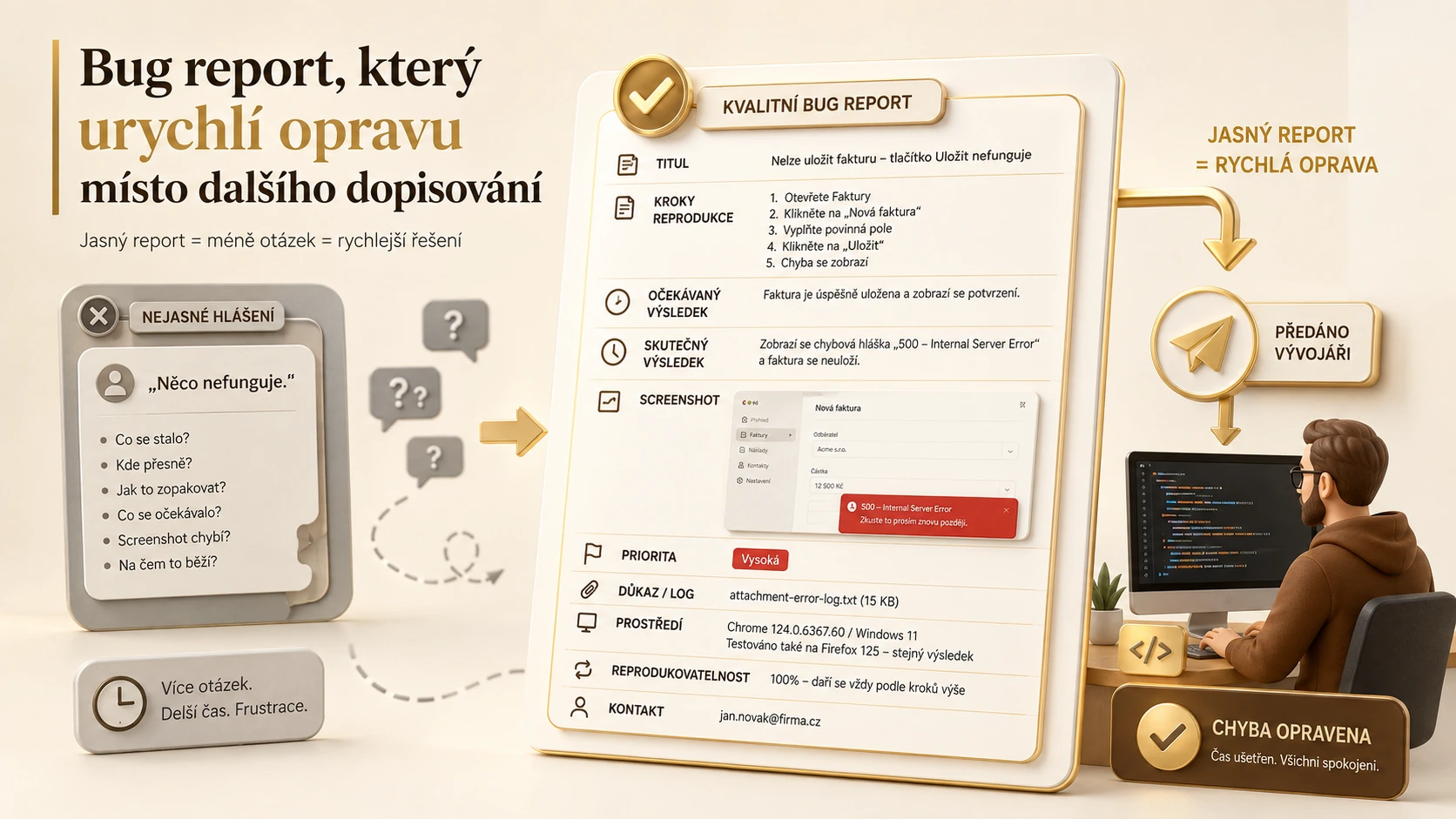
A bug report is a transfer of evidence. It should reduce uncertainty for developers, analysts and product owners rather than merely state that something is wrong.
The right amount of detail depends on the issue, but clarity, reproducibility, environment and impact are consistently valuable.
How to do it well
Write a specific title
Name the action, condition and outcome instead of using “does not work”.
State environment and version
Include browser, account type, build, feature flag and relevant data context.
Provide minimal steps
Remove unnecessary actions and make setup explicit.
Separate expected and actual
Describe observable behaviour without mixing it with assumptions about the cause.
Explain impact and frequency
State who is affected, whether work is blocked and how often it occurs.
Attach useful evidence
Add screenshots, video, logs, request IDs or data examples while protecting sensitive information.
What to avoid
- Using vague titles such as “error in campaign”.
- Pasting huge logs without highlighting the relevant time and identifier.
- Guessing the technical cause in place of observed facts.
- Omitting account, permissions or data conditions needed for reproduction.
- Assigning severity without explaining user or business impact.
Practical example
“Export fails” becomes “CSV export remains in Processing for audiences above 100,000 contacts in build 2026.04.18”. The report includes a job ID, timestamp and expected completion.
A developer can now reproduce the condition or trace the exact request without several rounds of clarification.
Lesson for practice
A good bug report is concise evidence with context. It accelerates repair by making the problem reproducible, impact understandable and investigation traceable.
A good practice does not have to be complicated. It should be intentional, repeatable and explainable: the team should understand why the control exists, what evidence it provides and how feedback will improve the next iteration.